


Monument to the Canary Islands Seaplane Base
The monument located next to El Muelle Shopping Centre, in the surroundings of the Port of La Luz, is dedicated to the former Canary Islands Seaplane Base and to the aviation pioneers who used La Luz Bay as a maritime airport during the first half of the 20th century. The plaque was inaugurated on 6 May 2016 as part of the commemorative events marking the Centenary of Aviation in the Canary Islands, with the aim of remembering a fundamental yet little-known chapter in the history of the archipelago.
La Bahía de La Luz was the first maritime airport in the Canary Islands. From 1919 and for more than twenty-five years, numerous seaplanes from Europe, Africa, and America used these waters as a stopover, making Gran Canaria an important air communications hub in the Atlantic. At a time when modern airports did not yet exist or were underdeveloped, seaplanes offered an effective solution for long-distance flights, as they could take off and land on the sea.
The plaque specifically commemorates the first landing in the bay by a Georges-Lévy HB-2 in 1919, as well as the presence of the Dornier Do J Wal, a model used in the first stage of the historic Plus Ultra flight in 1926. This aircraft starred in one of the greatest feats of Spanish aviation by crossing the Atlantic Ocean between Spain and Argentina.
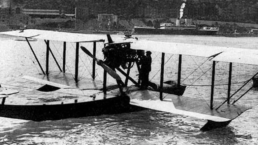
La Luz Bay was the first maritime airport in the Canary Islands. From 1919 and for more than twenty-five years, numerous seaplanes arriving from Europe, Africa and the Americas used these waters as a stopover point, turning Gran Canaria into an important hub for air communications across the Atlantic. At a time when modern airports were either non-existent or still underdeveloped, seaplanes provided an effective solution for long-distance travel, as they were able to take off and land on water. The plaque particularly commemorates the first water landing in the bay, carried out by a Georges-Lévy HB-2 in 1919, as well as the presence of the Dornier Do J Wal, the aircraft model used during the first stage of the historic Plus Ultra flight in 1926.
This aircraft achieved one of the greatest milestones in Spanish aviation history by crossing the Atlantic Ocean between Spain and Argentina. Although air activity later moved to Gando Airport, La Bahía de La Luz played a fundamental role in connecting the Canary Islands with the rest of the world during the first decades of modern aviation.